}
@media all{

#document_type,#document_number{
color:#493FB8 !important;
}
.header, .main_inv_table th{
background-color:#493FB8 !important;
border:1px solid #493FB8 !important;
}
#seller,#buyer,#summary{
border:1px solid #493FB8;
}
#pos_table .summary_totals > td:not(:empty){
background-color:#493FB8 !important;
border-bottom:1px solid #493FB8 !important;
}
table.main_inv_table td {
border-left: 1px solid #493FB8 !important;
border-right: 1px solid #493FB8 !important;
}
table td.empty{
border:none;
}
#pos_table > tbody > tr.position_row:last-of-type > td{
border-bottom:1px solid #493FB8 !important;
}
#pos_table tr.summary_totals > td.summary_header{
border-left: 1px solid #493FB8 !important;
}
#pos_table tr.summary_totals > td:not(:empty):last-of-type {
border-right: 1px solid #493FB8;
}
table td.empty {
border: 0 !important;
}
#seller_sign span{
color:#493FB8;
}
#buyer_sign span{
color:#493FB8;
}
Después hay que guardar los cambios.
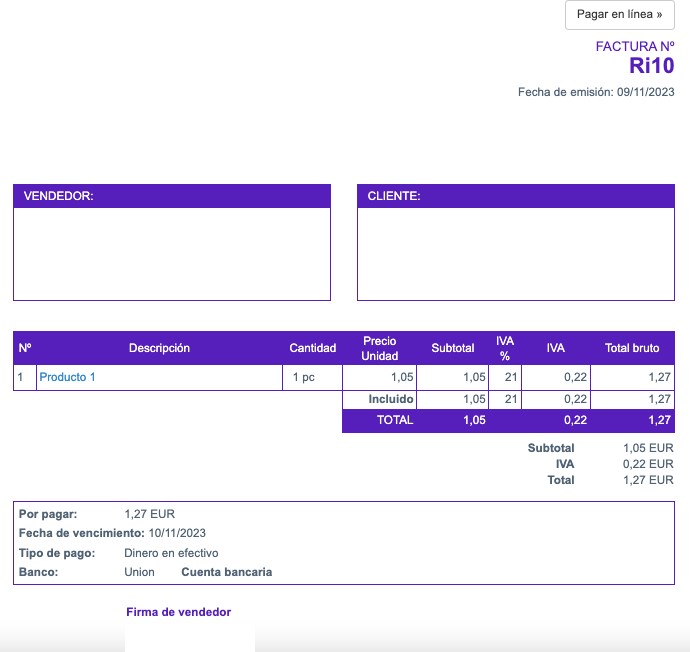
En el código CSS anterior, utilizamos el llamado código hexadecimal del color violeta, #493FB8. Por supuesto, puedes utilizar un color diferente en nuestro código CSS en forma de código hexadecimal.
Si necesitas otro color puedes buscarlo en internet. Introduce la frase "códigos hexadecimales de colores" en tu navegador.